
AIM Photonics Enables Space-Qualified Photonics Research Aboard the International Space Station
Current ISS experiments are informing the development of future space applications
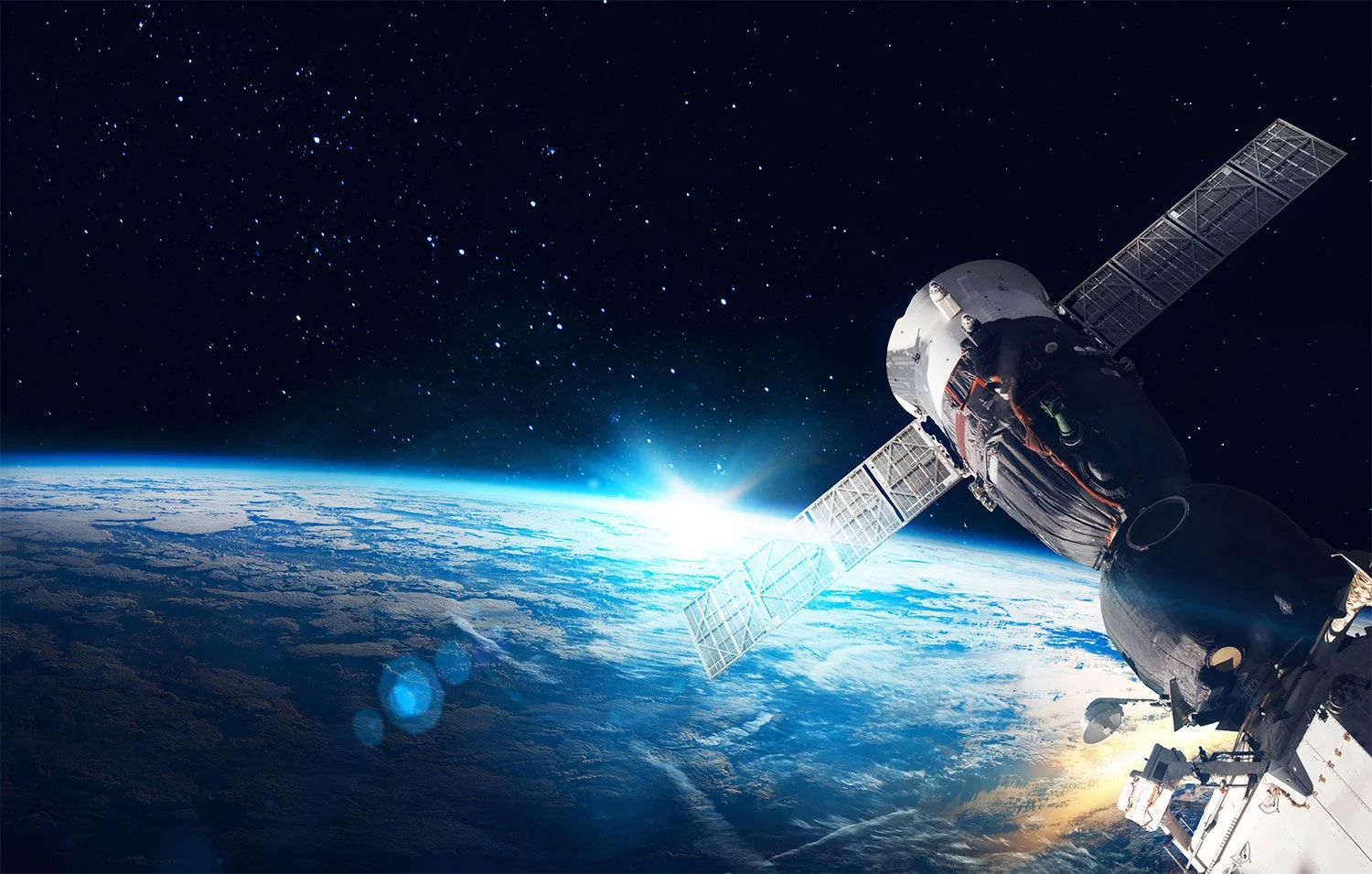
In separate experiments on the International Space Station, teams are exploring how photonic devices manufactured at AIM Photonics can withstand the extreme conditions of space, including radiation exposure and rapid temperature changes, and what that means for the future of space-based applications in communications, sensing and advanced computing.
Two distinct sets of integrated photonic chips developed and manufactured using the AIM Photonics platform are undergoing evaluation under space conditions aboard the International Space Station (ISS) as part of NASA’s Materials International Space Station Experiment (MISSE), marking a major step in testing how light-based technologies perform outside Earth’s atmosphere.
In separate experiments, teams from NLM Photonics and the University of Florida are exploring how photonic devices can withstand the extreme conditions of space, including radiation exposure and rapid temperature changes, and what that means for the future of space-based applications in communications, sensing and advanced computing.
For AIM Photonics, this achievement underscores its role in enabling advanced research and development in integrated photonics technology. It demonstrates how the Institute’s capabilities provide the means to test, validate and scale new materials and applications that will expand the reach of photonics into new environments.
Understanding How Photonics Perform Beyond Earth
Space presents one of the harshest environments imaginable for electronic and optical systems to function. Devices must withstand intense radiation, wide temperature swings and the absence of oxygen and airflow for cooling, all while maintaining reliable performance. Developing space-qualified photonic technologies means adapting the same light-based devices that already power data centers, telecommunications and advanced computing systems on Earth to function dependably under the extreme conditions in space.
To achieve that, researchers are exploring new materials, device designs and packaging approaches that can tolerate radiation exposure and thermal stress without compromising signal integrity or efficiency.
The current experiments being conducted aboard the International Space Station will contribute valuable insight into how photonic technologies behave outside Earth’s atmosphere and how design choices made on the ground influence performance in orbit.
“Silicon photonics brings several natural advantages for space applications,” said David Harame, AIM Photonics Chief Operating Officer. “The silicon-on-insulator substrate provides natural radiation tolerance to some extent, and PIC designers can experiment with various doping and waveguide levels to make the circuits less sensitive to harsh conditions in space. When combined with the consistency of AIM Photonics’ fabrication process, it gives researchers a reliable platform for experiments on orbit.”
Evaluating New Materials and Architectures in Orbit
One of those experiments comes from NLM Photonics, an AIM Photonics member developing organic electro-optic (OEO) materials designed for high performance and low power consumption. The photonic chips—which were developed in collaboration with AIM Photonics through a NASA Small Business Technology Transfer (STTR) grant to produce silicon-organic hybrid electro-optic modulators optimized for efficiency and durability in orbit—are now being tested to study how their novel OEO materials respond to the radiation and thermal conditions found in space.
“By studying how these materials perform and endure in space, we can accelerate the development of durable, energy-efficient photonic technologies for future spacecraft, satellites and habitats, supporting NASA’s long-term goals for human presence in space,” said Dr. Lewis E. Johnson, NLM Photonics co-founder and Chief Technology Officer.
In another study, a team from the University of Florida is testing photonic devices and machine learning circuits developed through AIM Photonics to see how well their photonic AI hardware can perform in the harsh conditions of space. Conducting these tests aboard the International Space Station is expected to reveal operational data on how radiation and temperature extremes affect device performance, providing valuable insight that could lead to more robust photonic systems for future missions.
“This mission represents an important step toward understanding how photonic AI systems perform in space,” said Volker J. Sorger, Ph.D., Rhines Endowed Professor for Semiconductor Photonics in University of Florida’s Department of Electrical and Computer Engineering. “AIM Photonics helped us bring advanced photonic hardware from concept to orbit, enabling us to explore how AI-driven computing can operate reliably in extreme environments and support greater autonomy for future missions.”
Together, these experiments illustrate two complementary approaches to advancing space-qualified photonic technologies. One explores new materials designed specifically for the challenges of orbit, while the other evaluates how current photonics technologies such as AI perform in the space environment. Both rely on AIM Photonics’ ability to deliver high-quality, precisely engineered devices, and both contribute to a growing understanding of how photonic technologies can operate reliably in space.
Supporting Space-Ready Photonics from Design to Deployment
These studies underscore the importance of a dependable development pathway that carries photonic technologies from early design through fabrication and into test-ready devices. For U.S. researchers working on space applications, that continuity makes it possible to evaluate new concepts not only on the ground, but in environments as complex and unforgiving as the ISS.
At the center of this work is AIM Photonics’ integrated development foundation. By connecting design support, wafer fabrication, and packaging and test within a single framework, researchers are able to move more efficiently through the development process while addressing performance and reliability questions along the way. This end-to-end structure helps reduce uncertainty as technologies transition from early development to use in space.
That foundation creates the momentum for what comes next.
As photonic technologies continue to prove their value outside Earth’s atmosphere, more opportunities for innovation will continue to evolve, Harame explained.
“The path from concept to orbit is rarely straightforward,” he said. “But by giving system designers the tools and expertise to navigate it, AIM Photonics is helping define what’s possible for the next generation of photonic technologies.”