
NEWS

In recognition of National Manufacturing Day on Friday, October 2, AIM Photonics hosted students from Capital Region high schools at NY Creates’ Albany NanoTech Complex to experience the fast-growing world of integrated photonics and explore career opportunities helping to power tomorrow’s technology.

AIM Photonics joined leaders from across the Department of War Manufacturing Technology (ManTech) Program at the Pentagon recently to commemorate ManTech’s 70th anniversary and recognize the significant role of the Manufacturing Innovation Institutes in advancing technology development and U.S. manufacturing capabilities.
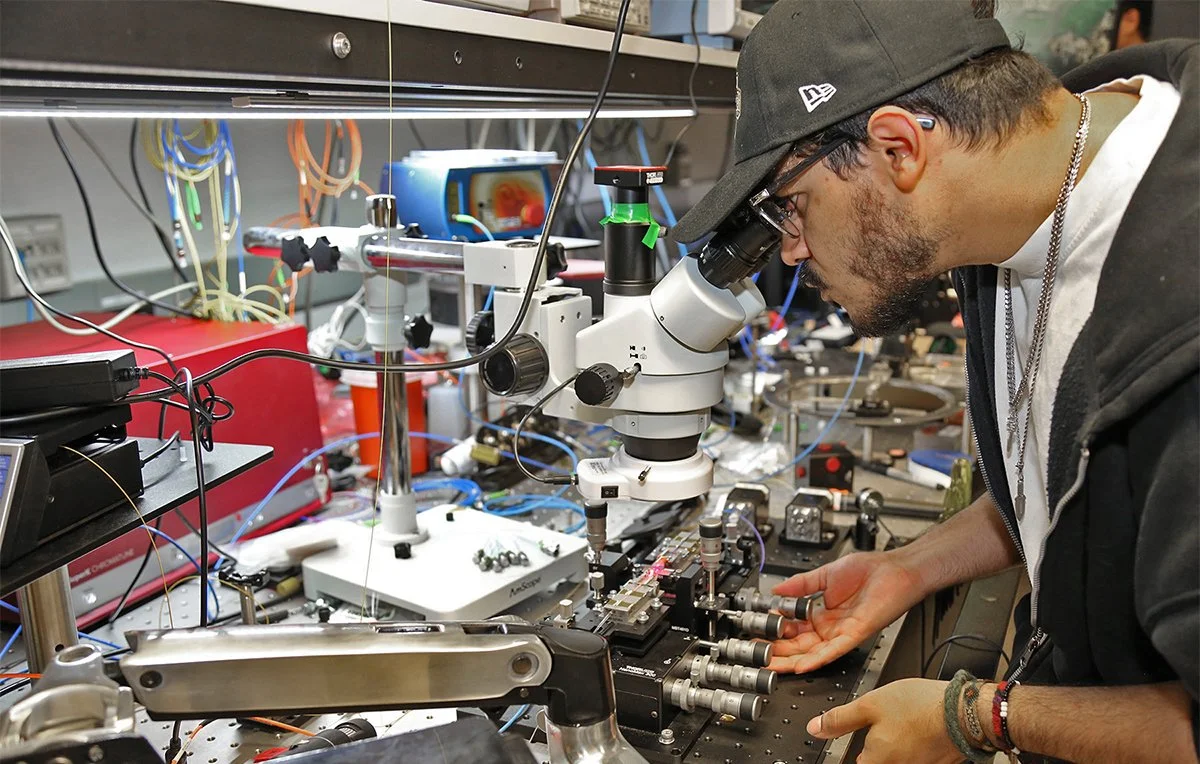
Developing the skilled workforce needed to support U.S. integrated photonics manufacturing requires more than classroom instruction. Students also need opportunities to apply what they are learning in real-world environments. AIM Photonics’ internship program allows students hands-on experience, experiential learning, while gaining an understanding how their skills contribute to the broader process of advancing technology from development through manufacturing.
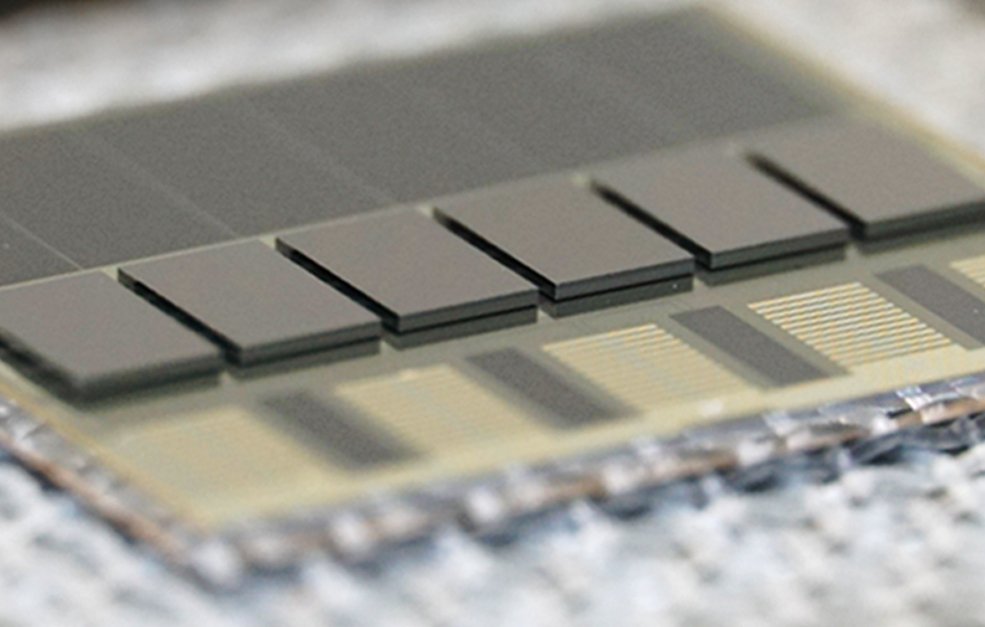
As photonics systems continue to evolve, chip-package co-design is playing an increasingly important role in overall system architecture. By embedding packaging considerations directly into the design workflow, AIM Photonics’ new assembly design kit (ADK) helps bring photonic chip design and assembly processes into closer alignment, enabling more mature prototypes that accelerate the path from design to commercialization.

Plenary speakers Tracy Frost, Eric K. Lin, and
Anna Tauke-Pedretti will highlight the importance of integrated photonics and its growing impact across critical technology sectors at AIM Photonics upcoming members meeting in Washington, D.C.
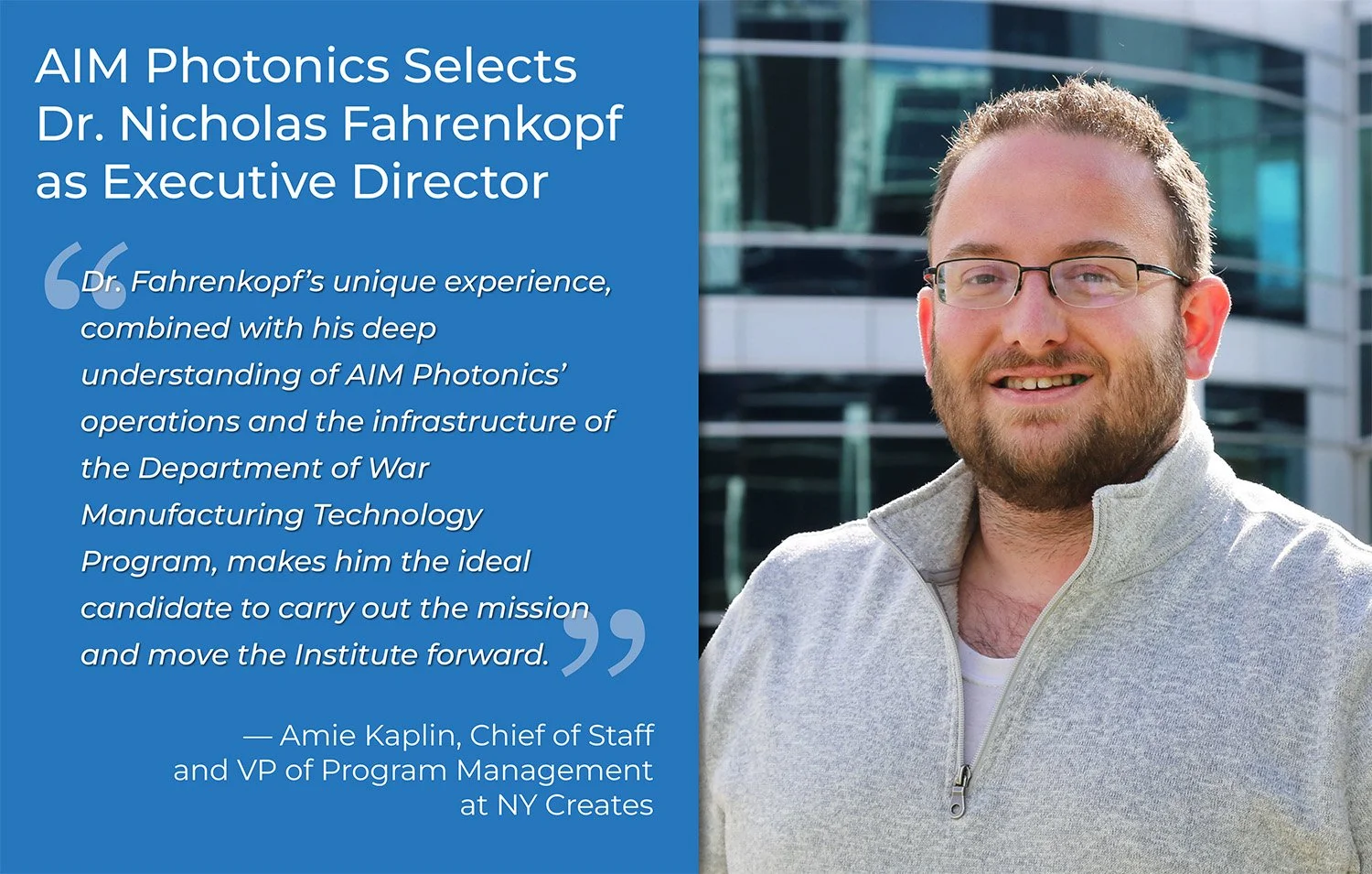
AIM Photonics is pleased to announce that Dr. Nicholas Fahrenkopf has been selected to serve as the Institute’s next Executive Director. With over 13 years’ experience in the industry, Fahrenkopf is an accomplished technical leader in the semiconductor, microelectronics and integrated photonics fields, bringing leadership experience across program execution, partnerships and technology development.

As demand grows for high-performance modulation in silicon photonics, integrating advanced materials into scalable foundry processes is a key step toward enabling next-generation applications. A recently announced design partnership between AIM Photonics members NLM Photonics and Spark Photonics is advancing the integration of NLM’s silicon organic hybrid materials into silicon photonics foundry processes, supporting applications in high-speed datacom, RF photonics, sensing and other demanding use cases.

A recent North American silicon photonics market report points to collaborations with AIM Photonics as a factor strengthening U.S. innovation and manufacturing in advanced optical technologies.
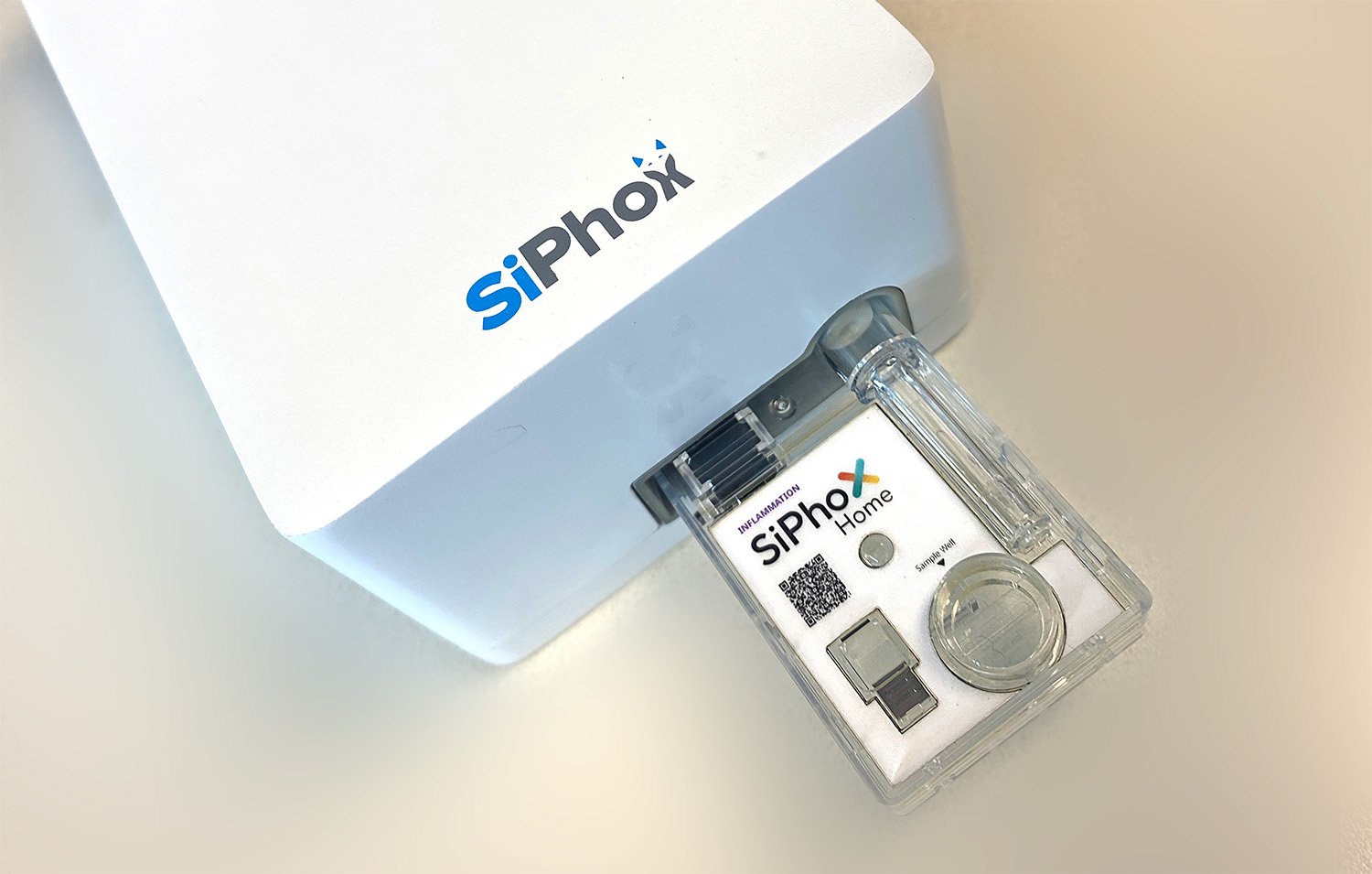
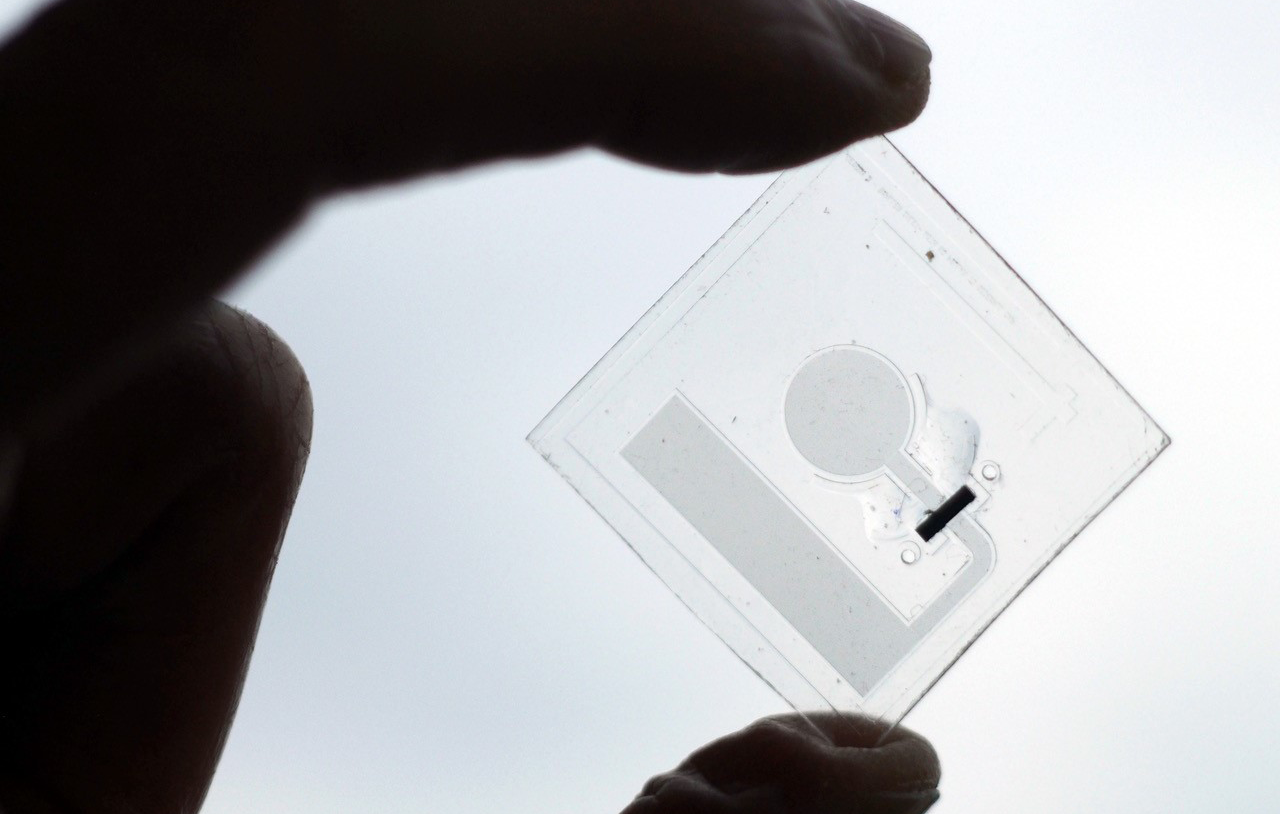
The U.S. Department of Defense Manufacturing Technology (ManTech) Program highlighted AIM Photonics’ role in enabling innovations that emphasize domestic manufacturing and warfighter readiness, such as the SiPhox Home portable blood diagnostic platform. The spotlight on AIM Photonics capabilities demonstrates how the Institute's end-to-end capabilities support the development of compact, low-cost photonic diagnostic systems that deliver rapid, lab-quality biomarker assessments.
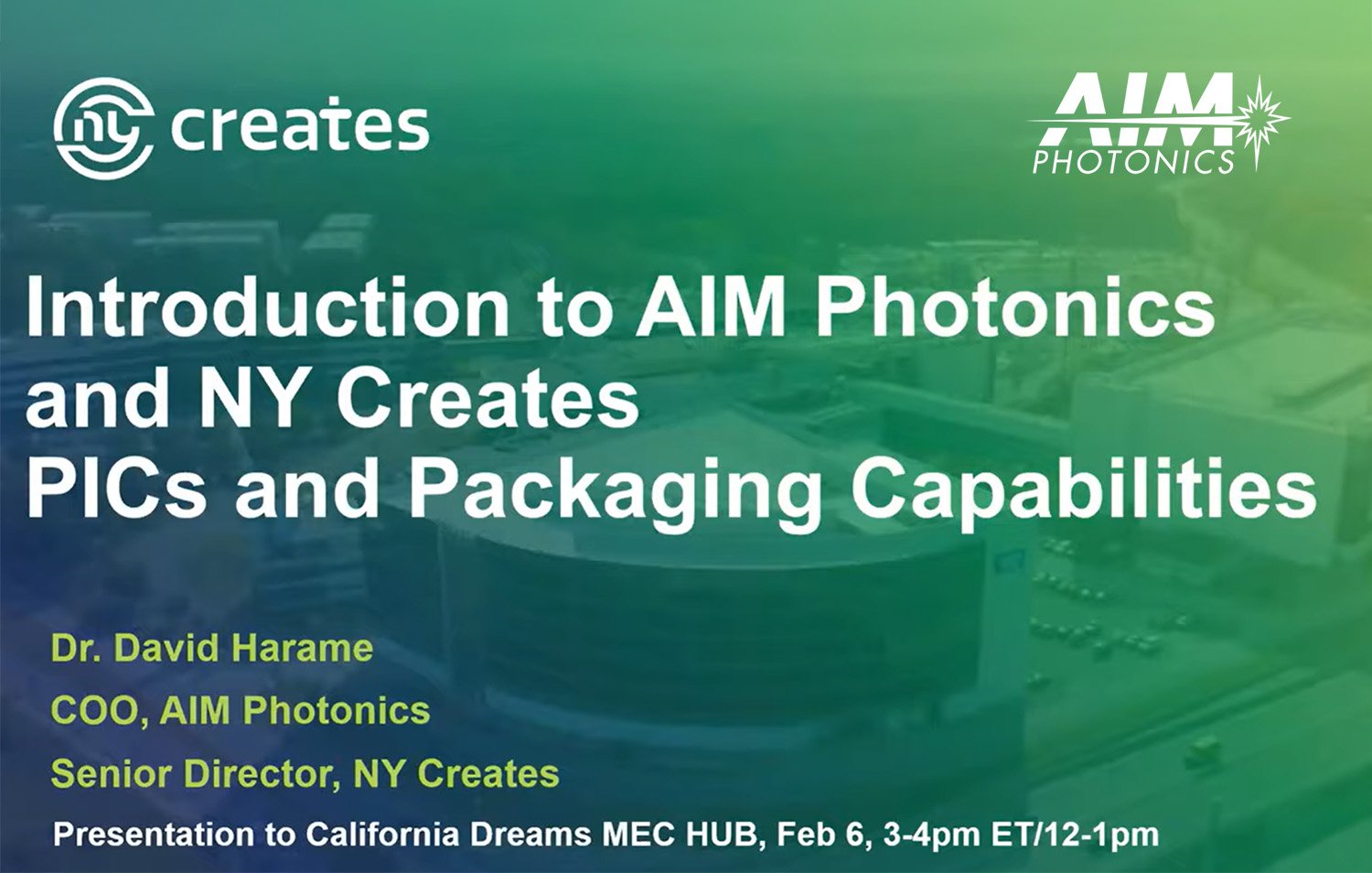
In a recent presentation to California DREAMS, David Harame, AIM Photonics Chief Operating Officer and Senior Director at NY Creates, provided an overview of the organizations’ 300 mm silicon photonics platforms, heterogeneous integration and advanced packaging capabilities, along with education and workforce development programs supporting the broader microelectronics community.

AIM Photonics was recently recognized in the Trump Administration’s Science & Technology Highlights: Year One report as part of the Department of Defense Manufacturing Technology Program's Manufacturing USA Network, which brings together industry, academia and government to help address America’s manufacturing challenges.

Two distinct sets of integrated photonic chips developed and manufactured using the AIM Photonics platform are undergoing evaluation under space conditions aboard the International Space Station (ISS) as part of NASA’s Materials International Space Station Experiment (MISSE), marking a major step in testing how light-based technologies perform outside Earth’s atmosphere.
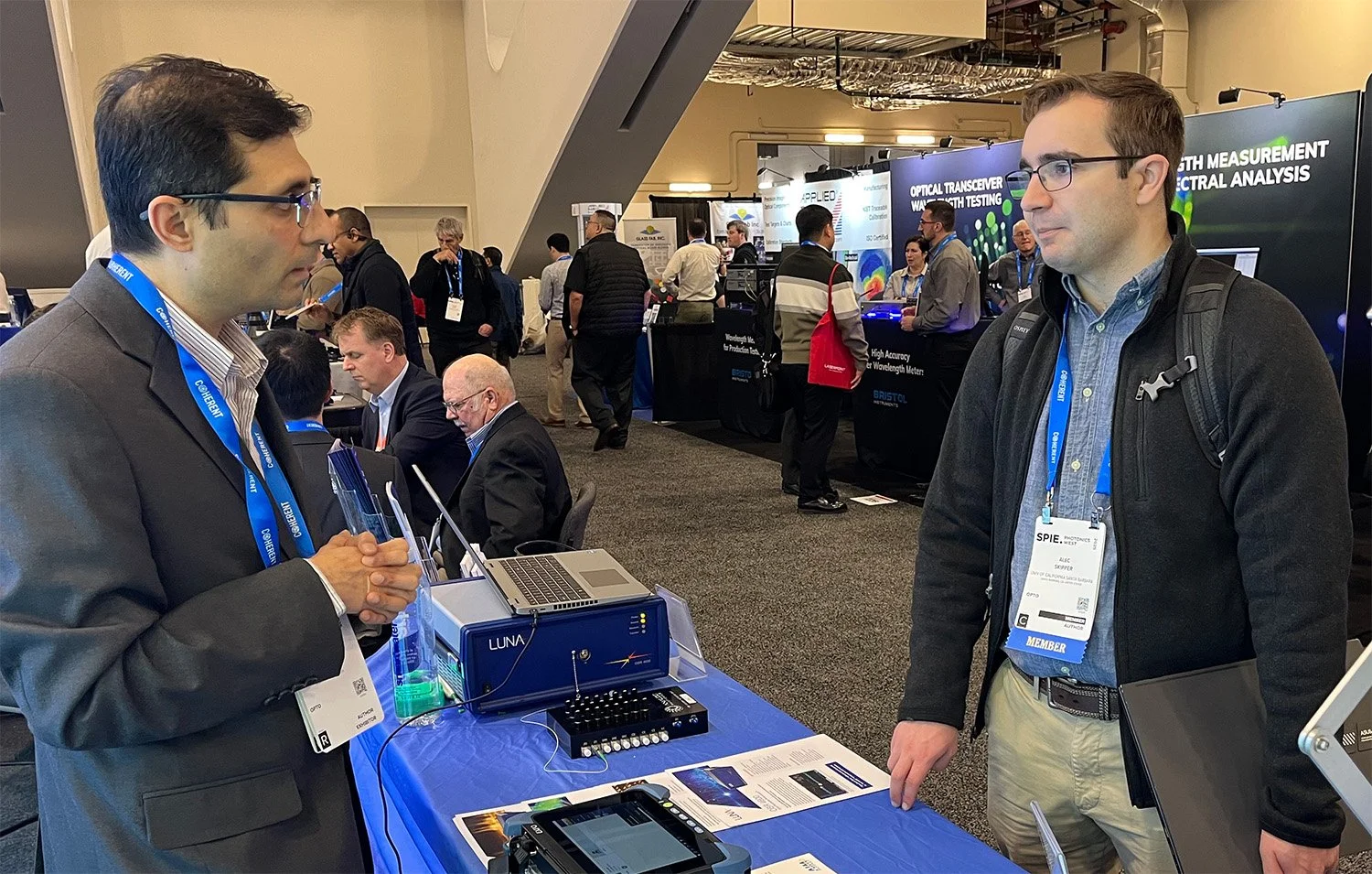

One of the biggest obstacles to fully optical computing has been the lack of a fast, scalable photonic memory cell. This article shows how researchers at the University of Wisconsin–Madison have taken a pivotal step by demonstrating a manufacturable photonic memory device that functions as an optical counterpart to traditional SRAM and addresses a long-standing gap in optical system design.

AIM Photonics member NLM Photonics is putting next-generation silicon-organic hybrid photonic technology to the test as part of NASA’s MISSE-21 mission aboard the International Space Station. Developed in collaboration with AIM Photonics, the chips feature electro-optic modulators built with NLM’s proprietary materials, designed to deliver high modulation efficiency and low power consumption for spacecraft applications.

In a major milestone for space-enabled semiconductor research, photonic AI chips designed for next-generation computing are now being tested in orbit through a project led by the University of Florida with NASA, AIM Photonics, MIT, Vanguard Automation and Germany’s Fraunhofer Heinrich Hertz Institute.

Photonic integrated circuits (PICs) are at the core of modern communications, powering everything from 5G networks to AI data centers. This article explores how AIM Photonics has strengthened U.S. manufacturing by creating an accessible, low-cost multi-project wafer (MPW) platform that accelerates innovation from design to production.

In the latest episode of Photonics in Focus, Sarat Gundavarapu of SiPhox Health discusses the development of SiPhox Home, an innovative in-home diagnostic platform powered by photonic chips. The conversation explores how collaboration with AIM Photonics supported the advancement of this breakthrough technology—from early design challenges to scalable manufacturing solutions.

Strategic financial support—whether awarded directly to AIM Photonics or to partners working in collaboration—enables the Institute to contribute to high-impact research that pushes the boundaries of integrated photonics.

As industries from quantum computing to AI and advanced manufacturing increasingly depend on photonics, the field faces a critical obstacle: a shortage of skilled professionals. This article examines how the growing workforce gap is slowing progress in developing quantum computers, high-speed data centers and other technologies that rely on integrated photonics.
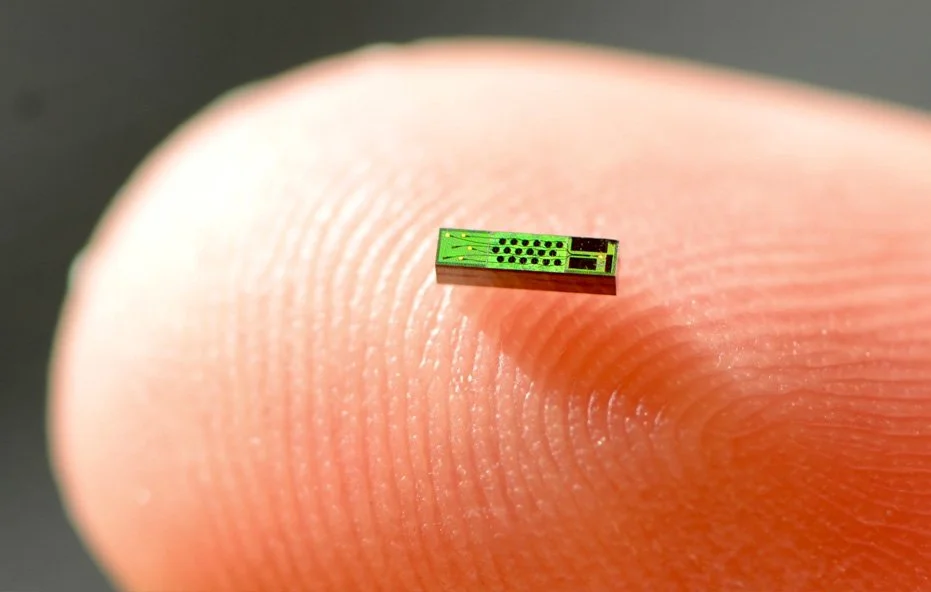
Collaboration through AIM Photonics’ BioINSPECT program—a joint initiative between AIM Photonics and Advanced Regenerative Manufacturing Institute (ARMI) | BioFabUSA—is helping drive new advances in regenerative medicine. Under the program, AIM Photonics member Phlotonics Inc. has been awarded a $1.1M contract to work with leading academic researchers from the University of Rochester and Rochester Institute of Technology to adapt its BioproSense™ platform for regenerative biomanufacturing.